
A life that practised prevention
before medicine defined it.
For much of a century, Queen Elizabeth II was the most widely recognised leader in the world. What makes this the right moment is what her life was.
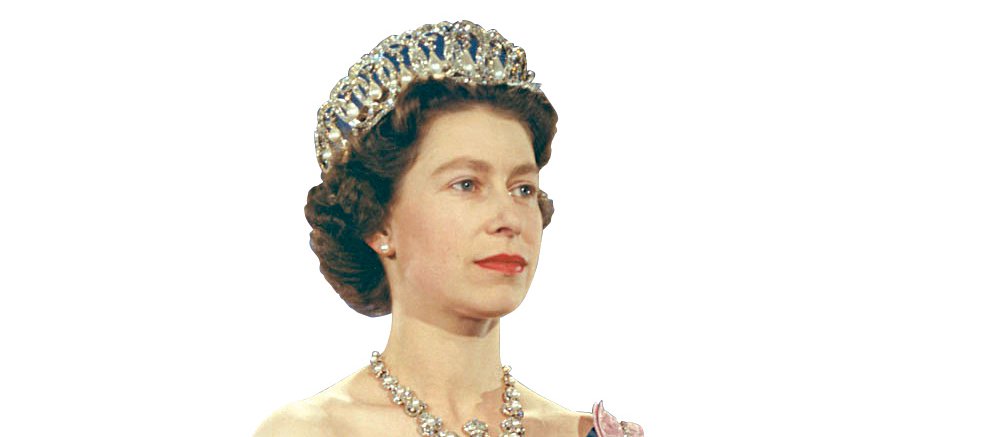
She worked upstream
at the scale of nations.
For seventy years, Queen Elizabeth II worked upstream. She built relationships before fracture demanded them. She provided stability across upheaval—not as policy, but as discipline, sustained through every decade of a changing world. She acted before urgency made action easy. And she gave her name to institutions and causes long before urgency made patronage obvious.
She raised the visibility and status of women at the level of the head of state—not through advocacy, but through the unbroken fact of her presence, held continuously for longer than any comparable figure in modern history. Where women lead visibly, the standing of women in public life rises with them. That was true of her reign in ways that outlasted every formal achievement.
The logic was constant: act before the harm arrives. Address the conditions that produce fracture before fracture demands it. Build the relationships that prevent conflict in the years when conflict seems unlikely. She understood, in practice if not in clinical language, that the upstream moment is the only moment at which the future can be changed.
She practised what medicine
has not yet systematised.
Medicine understands prevention. It has not yet made prevention its organising principle—has not yet built the discipline that places upstream action at the centre of clinical responsibility, rather than at its margin. What Queen Elizabeth II practised across a lifetime, medicine has not yet given formal standing.
Preemptology is that logic given clinical form—a discipline that assigns to medicine the same upstream accountability she exercised across nations.
The parallel is precise. Preemptology does not begin with disease. It begins with the conditions that produce it. It holds that the proper work of medicine is to address those conditions before a patient needs to present. That is the logic she lived. The discipline now exists to give it clinical standing.
She made longevity
visible—and desirable.
For decades, Queen Elizabeth II sent personal messages to citizens of the Commonwealth on their hundredth birthday. More than 100,000 in all—one by one, without fanfare. The practice was received as ceremony. Its effects were something larger.
To acknowledge the longest lives at the level of the head of state is to make longevity a public value. Old age became something to aim for. Families organised around that possibility. The prospect of a long life—marked, honoured, visible—gave people reason to want it. She incentivised the will to live long, across seventy years, at the scale of a Commonwealth.
Whether medicine recognised it or not, a head of state who spent seventy years incentivising the will to live long was practising prevention.
Queen Elizabeth II’s 100th birthday, 21 April 2026, begins the centenary countdown: the unveiling of the Give 100 invitation and the opening of the preparatory season. That countdown is not inactive time. It is the period in which Cities, Founding Commissions, Champions, Beacons, hosts, institutions, and citizens prepare the work that will formally open on the International Day of Peace.
On 21 September 2026, Give 100 formally opens. Across the 100 Commonwealth Cities, the Opening Semidons begin the Sovereign Shield: a year of disciplined giving, civic formation, and institutional founding, culminating on 21 September 2027, again on the International Day of Peace.
No Semidon precedes that opening. Before 21 September 2026, the work is preparatory: invitations may be issued, commitments secured, conveners briefed, LAMPs identified, and Opening Semidons prepared. But the Semidon itself belongs to the observance year.
Thus peace is not a decorative theme of the observance. It is its constitutional rhythm: the Sovereign Shield opens on the International Day of Peace and culminates on the International Day of Peace. Peace through preemption is the great theme of the observance, and it honours a Sovereign of whom it may rightly be said: her ways were ways of gentleness, and all her paths were peace.
Such a life must not merely
be honoured.
A life lived upstream—across seven decades, at the scale of nations, in the logic of prevention—demands an honour of the same kind. Not something that closes when the formalities are complete. Something that continues the work.
- Not a ceremony that concludes.
- Not a season of commemoration that leaves nothing standing.
- An institution that will still be averting deaths a hundred years from now.
An institution that will still be naming her, still operating in the logic she embodied, still averting deaths a hundred years from now—when those it saves have lived long enough to receive the telegram she never did. That is the measure of proportionate honour.
Preemptology gives prevention clinical ownership.
Explore the DisciplineThe institution
her legacy requires.
The Institute of Preemptology is that institution. It is being established to give Preemptology formal standing as a medical discipline—one that places upstream action at the centre of clinical practice, not its periphery. In naming Queen Elizabeth II as the figure whose life most fully embodied that logic, the Institute names its own founding principle.
Within the Institute, the Queen Elizabeth II Centre for Cervical Cancer Elimination — QE2C — is the first operational expression of Preemptology in practice—devoted to the elimination of a preventable disease through structured, population-level, upstream action.
It is named for a woman whose entire public life was the argument the Centre now makes in clinical terms. The designation is institutional. It is the institution acting in her image—before the disease acts first.
The Queen Elizabeth II Centre for Cervical Cancer Elimination gives the discipline its first defining charge.
Explore the FlagshipNot the boundary.
The beginning.
The Commonwealth is the primary expression of Queen Elizabeth II’s upstream philosophy—built across 56 nations through long investment, sustained relationship, and the kind of trust that cannot be assembled quickly. It is where she worked most continuously and where the logic of prevention was most fully lived.
It is therefore the natural opening ground for Preemptology: a community of nations already shaped by upstream governance, now prepared for the medicine that upstream governance implies. Not a constraint on the discipline’s ambition— its first and most prepared field of deployment.
From there, the work extends. But it begins where her philosophy was already proven—across the nations she held together, through the relationships she refused to allow to fracture.
The 100-Question Guide sets out the full constitutional architecture of Give 100: the observance, the Founding, the offices, the Semidon, the Centory, the Sovereign Shield, and the institution that remains.
Read the 100-Question GuideThe Elizabethic era gives the world what no era before it has: a discipline with a single mandate—to eliminate the preventable aspect of disease. Preemptology.